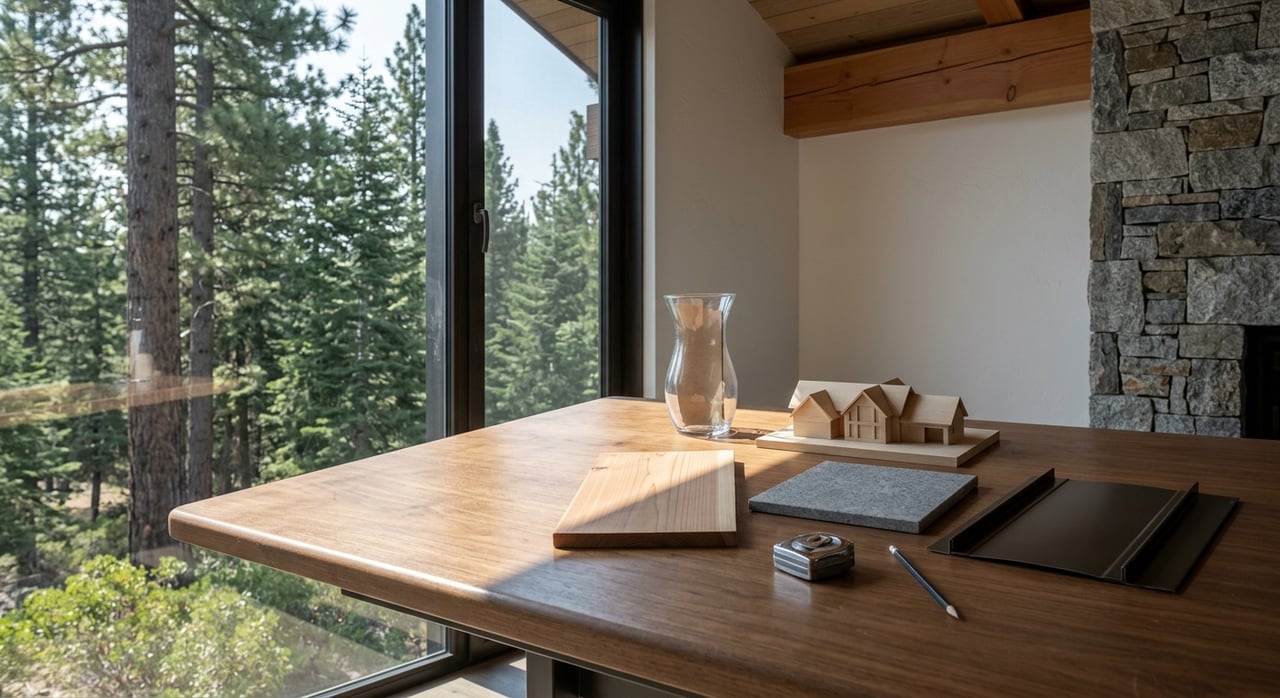
Martis Valley Custom Home Lots: What to Know Before You Buy
June 25, 2026
June 25, 2026
A custom homesite in Martis Valley can look simple on paper, but the real story starts after you fall in love with the view. If you are considering land in this Truckee luxury corridor, you are not just buying acreage. You are buying into a specific design process, utility setup, review timeline, and wildfire framework. This guide will help you understand what matters most before you write an offer. Let’s dive in.
Martis Valley is a roughly 45,000-acre landscape between North Lake Tahoe and Truckee. It stretches across both Placer County and Nevada County, which means the rules tied to a parcel can vary depending on jurisdiction, HOA, and utility district.
That is why “Martis Valley” is best understood as a geographic and lifestyle label, not a single rulebook. For most custom-lot buyers in this luxury corridor, the key communities to compare are Martis Camp and Lahontan.
Both communities sit within the Martis Valley Water System, which is operated by Northstar Community Services District. Even so, water, sewer, permitting, and design review are not one-size-fits-all, so careful due diligence matters from the start.
Martis Camp is a 2,177-acre private community known for low-density custom homesites. Estate homesites average over 1.5 acres, while cabin homesites are typically about 0.3 to 0.6 acres.
Lahontan is a 906-acre private golf community with its own formal covenant-review process. Both communities support custom home design, but they approach design approval in different ways.
Martis Camp’s architecture review process is built around creativity that still fits the site and surrounding setting. The review path includes geotechnical work, pre-design meetings, conceptual and preliminary design, final design, pre-construction review, construction oversight, landscape review, and final release.
That structure gives you meaningful design freedom, but it also means the lot itself has to support your vision. In Martis Camp, the question is often less about whether you can build a custom home and more about whether the parcel can support the home you want within the community’s siting rules.
Lahontan also allows custom design, but its published process is more calendar-driven. New architects and general contractors must attend orientations before beginning design or construction, and the community recommends starting site clearing and excavation no later than September 1.
Its review calendar and staged submission process can shape your build timeline early. If you want to build in Lahontan, your team needs to be ready to work within the community’s meeting schedule, seasonal construction window, and material-approval steps.
A beautiful lot photo does not tell you how easy it will be to build. In Martis Valley, the smartest buyers look past the view and study the practical constraints of the site.
Your parcel’s permitting authority depends on where the lot sits. In Placer County’s unincorporated areas, Placer County issues permits, and for applications submitted on or after January 1, 2026, the county uses the 2025 California Building Standards Code, including new Part 7 WUI wildfire-mitigation provisions.
If a lot is inside Truckee town limits, the Town of Truckee has its own requirements. That can include a site-specific erosion prevention plan prepared by a certified or licensed professional, along with possible survey, soils, WELO, and WUI-related documentation.
In Martis Camp, maximum building size is not automatically guaranteed on every lot. The handbook makes clear that build potential depends on parcel characteristics.
That means you should ask early whether the homesite can accommodate your desired building area, garage placement, driveway layout, and outdoor spaces. A larger lot does not always mean an easier build.
Driveway design is a major part of lot usability in mountain communities. Martis Camp’s handbook says driveways should follow landforms and vegetation, stay narrow across the front setback, and keep parking and driveway aprons within the building envelope.
You should also look at grade, winter access, and snow storage. A dramatic approach may look appealing, but steep access can complicate both construction and daily use.
Lot orientation matters as much as lot size. Existing vegetation, view corridors, and solar exposure all affect how a future home will sit on the site.
In Martis Camp, garage doors facing the roadway are generally disfavored unless screened well, and exterior lighting must be shielded and motion-controlled to limit light spill. Those rules can influence where you place the house, driveway, and gathering spaces.
One of the most common delays in custom-lot purchases is assuming utilities will be straightforward. In Martis Valley, utility coordination often deserves as much attention as the land itself.
Northstar Community Services District acquired the Martis Valley water infrastructure in 2015 and created the Martis Valley Water System. That system serves Martis Camp, Lahontan, and Schaffer’s Mill, with water drawn from the Martis Valley aquifer.
Before closing, you should confirm meter availability, connection costs, point-of-service details, easements, and any parcel-specific water limits. NCSD’s water ordinance governs these issues, so assumptions can create avoidable surprises.
Sewer service adds another layer. NCSD directs Martis Camp, Lahontan, and Schaffer’s Mill customers to Truckee Sanitary District.
Truckee Sanitary District says sewer service in the Truckee area is split between TSD and Tahoe-Truckee Sanitation Agency. TSD handles collection and conveyance from the home to the treatment plant, while TTSA operates the treatment plant. TSD’s permit process requires a building permit copy, a site plan with finished-floor elevations, separate checks to TSD and TTSA, and inspections before final occupancy approval.
If you are used to buying finished homes, design review may be the biggest adjustment. In Martis Valley, architectural approval is not a formality. It is a core part of the ownership experience.
Martis Camp’s process begins before design is finalized. It includes geotechnical work and a pre-design site meeting, followed by several rounds of review through architecture, construction, and landscape completion.
There are also posted review fees, construction administration fees, and refundable deposits related to construction, landscaping, and restoration. This is one reason experienced planning matters before you commit to a lot.
Lahontan places notable emphasis on materials presentation. Final design requires a color-and-material board, and the onsite mockup must display substantial real samples of siding, roofing, trim, stone, and other exterior materials before final approval.
That level of detail makes early architect and builder selection especially important. Your team needs to be prepared not just to design well, but to document and present the design through each stage.
In Martis Valley, wildfire readiness should be treated as a core buying factor, not a later checklist item. The site you choose can affect defensible space, material choices, landscaping, and long-term maintenance.
Placer County defines defensible space as the buffer between a building and surrounding wildland that helps slow or stop wildfire spread. That concept directly affects how a future home is sited and maintained.
Martis Camp says it maintains a 100- to 200-foot perimeter fuel break, participates in Firewise USA, and applies annual defensible-space expectations. It also says new homes are inspected by the Truckee Fire Department before occupancy.
Lahontan’s current document list includes a 2025-2026 Firewise certificate, which reinforces that wildfire mitigation is built into the community framework there as well. For buyers, this means wildfire rules are part of evaluating the lot itself, not just the future structure.
In both communities, your team can influence how smoothly the process goes. This is especially true when design review is detailed, timelines are seasonal, and utility and permit steps involve multiple entities.
Martis Camp uses a multi-stage architecture review process, while Lahontan requires orientations for new architects and contractors. That makes local familiarity a practical advantage.
A strong team can help you pressure-test the lot before you buy it. They can also help you understand whether your design goals align with the site, the calendar, and the review standards.
Before you move forward on a custom lot in Martis Valley, make sure you have answers to the basics that matter most:
The right homesite can be exceptional, but only if it fits the home you actually want to build. A disciplined pre-offer review can help you avoid expensive assumptions and move forward with confidence.
If you are evaluating a custom lot in Martis Valley, working with an advisor who understands Truckee’s luxury communities can save time and help you ask better questions from the start. To talk through lot options, community differences, and the steps that come next, connect with Jeremy Jacobson.
Stay up to date on the latest real estate trends.
Etiam non quam lacus suspendisse faucibus interdum. Orci ac auctor augue mauris augue neque. Bibendum at varius vel pharetra. Viverra orci sagittis eu volutpat.