Owning a Cabin on Donner Summit: What Buyers Should Know
July 2, 2026
July 2, 2026
If you picture a quiet mountain retreat with deep snow, trail access, and a true four-season rhythm, owning a cabin on Donner Summit can feel like a dream. It can also require more planning than buyers expect, especially when it comes to winter access, utilities, and ongoing property care. If you are thinking about buying a cabin here, it helps to know both the lifestyle and the logistics before you commit. Let’s dive in.
Donner Summit is not a typical town with a central main street and everyday suburban convenience. In Placer County, it functions more like a high-elevation mountain corridor organized around the pass, county advisory structures, and utility districts, including the Donner Summit Public Utility District in the Soda Springs and Sugar Bowl area.
For you as an owner, that often means a more remote and self-contained experience than you might find in Truckee or along the Tahoe shoreline. The appeal is real: more mountain atmosphere, more seasonal focus, and easier access to snow and trails. The tradeoff is that you need to think ahead about services, travel timing, and property management.
This is one of the biggest realities of owning on Donner Summit. At the nearby NOAA climate station in Soda Springs, which sits at 6,887 feet and serves as a good proxy for summit conditions, the 1991 to 2020 normals show 445.0 inches of annual snowfall and 78.55 inches of annual precipitation.
That level of snow is not just a scenic backdrop. It affects how you arrive, when you visit, how you maintain your property, and what you keep on hand during the winter season. January through March are especially snowy, with monthly snowfall normals of 73.0 inches in January, 84.2 inches in February, and 105.7 inches in March.
Snow can also linger later than many buyers assume. NOAA normals show 41.2 inches in April, 15.6 inches in May, and even 1.8 inches in June at the same nearby station.
Winter access can be reliable for long stretches, but it is never something to take for granted. Caltrans notes that I-80 over Donner Pass sees frequent chain usage during winter storms, and drivers are expected to follow posted chain-control directions and current road conditions.
Historic NOAA storm-event records show how quickly conditions can change. Separate storms on Donner Pass have included 24 inches of snow in about 12 hours and 40 inches in 24 hours, along with Interstate 80 closures and stranded motorists.
If you own a cabin here, flexibility becomes part of the lifestyle. You may leave earlier than planned, arrive later than planned, or decide a storm weekend is better enjoyed after the roads clear.
Placer County handles snow removal on county roads outside incorporated cities, but not on state highways. The county also notes that private roads are not county maintained.
That distinction matters a lot when you evaluate a property. A beautiful cabin can feel very different in January depending on whether the road is county maintained, privately maintained, or requires individual arrangements for plowing and snow access.
The county also uses snow gates on graders to reduce driveway berms, but it notes they work best when snowfall on the road is light. In practice, you should still expect snow berms, shoveling, and regular winter management.
One of the best parts of owning a cabin on Donner Summit is how quickly you can get outside. The Donner Summit Pacific Crest Trailhead, located on the south side of I-80 at the Castle Peak/Boreal exit, operates in summer from May 31 to October 31.
From there, you can access the Pacific Crest Trail north toward Castle Valley, Round Valley, and Peter Grubb Hut, or head south toward Historic Donner Pass, Mount Judah, the Benson Hut, and Tinkers Knob. The trailhead has vault toilets but no potable water, which gives you a good sense of the area’s rustic infrastructure.
That same trailhead shifts into a winter use area as the Donner Summit Sno-Park. According to the Forest Service, it supports cross-country skiing, snowshoeing, dog sledding, snow play, backcountry skiing on the north side of the freeway, and designated snowmobile unloading on the north side as well.
Permits are required at SNO-Park sites, with a daily and seasonal option. The Forest Service also notes that adjoining land is private property, which is an important reminder that recreation access and property boundaries are not the same thing.
Nearby Donner Memorial State Park adds another strong layer to the lifestyle. The park sits at about 6,000 feet and offers year-round access, including summer camping, hiking, fishing, and paddle sports, plus winter cross-country skiing and snowshoeing.
Tahoe National Forest also supports all-season recreation around the summit, including Nordic skiing, snowshoeing, snowmobiling, snow play, and climbing on Old Highway 40 at Donner Summit. For many owners, this direct connection to the outdoors is the reason the extra winter logistics are worth it.
One of the most important parts of buying on Donner Summit is understanding the exact utility setup for the parcel. In the Soda Springs and Sugar Bowl area, the Donner Summit Public Utility District provides sewer collection, wastewater treatment, and water distribution across about 758 acres of service area extending into northeastern Placer County.
Not every ownership question has the same answer from one property to the next. Placer County’s utilities report notes that wastewater flows in the area fluctuate greatly because of seasonal tourism, and district materials for Sugar Bowl show that sewer extension and septic abandonment have been active issues in some cases.
For some properties, owners may be responsible for connection fees and laterals on their own property. That is why utility status should never be assumed based on location alone.
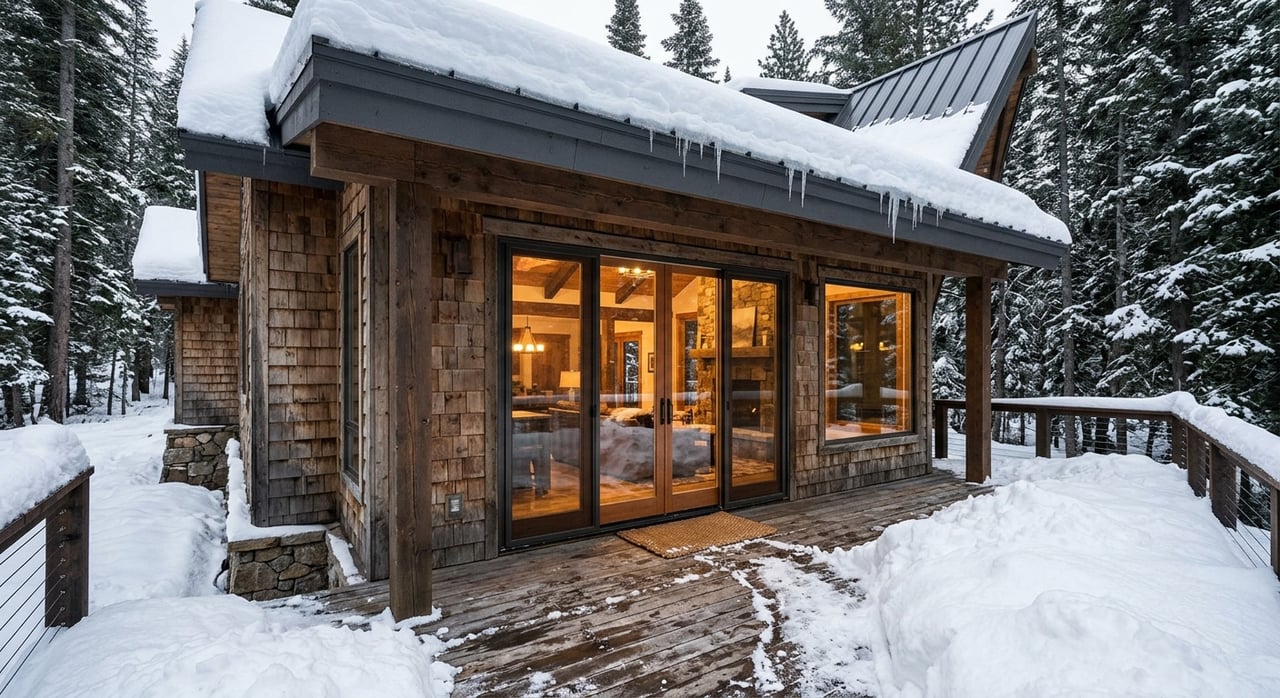
Owning a summit cabin usually means planning for snow beyond the public road. Even if county plows serve the street, you still need to think about driveway access, berms, walkways, roof snow, and how the property functions during and after major storms.
This is especially important if the home sits on a private road or if you will not be there full time. For many second-home buyers and remote owners, winter care is not an occasional task. It is a core part of ownership.
A snow-heavy environment can look low-risk in winter, but wildfire preparedness remains part of mountain ownership. Truckee Fire Protection District says Station 97 serves the Donner Summit area and the I-80 corridor.
The district’s defensible-space guidance emphasizes home hardening, fuel reduction, and maintaining space around structures. It also says defensible-space inspections are required for real-estate transactions, short-term rentals, and building-permit finals, and that it is running a community wildfire-prevention grant program for the Truckee and Donner Summit wildland-urban interface.
For many buyers, Donner Summit cabin ownership is best understood as seasonal or semi-seasonal by nature. That does not mean you cannot enjoy it year-round. It means the property and the lifestyle follow a strong mountain calendar shaped by snow, road conditions, trail access, and maintenance needs.
In summer and fall, your cabin may feel like a basecamp for hiking, climbing, and quiet time in the mountains. In winter and spring, it becomes a snow property first, with everything that comes with deep accumulation, chain controls, and regular snow management.
If that rhythm sounds exciting to you, Donner Summit can offer a very special ownership experience. If you want easier year-round spontaneity and more built-out services close at hand, it is wise to compare the summit with lower-elevation or more service-oriented areas nearby.
Before you move forward on a cabin purchase on Donner Summit, it helps to verify a few basics early in the process:
These details may sound small when you are standing in a beautiful cabin after a fresh snowfall. In practice, they shape your day-to-day ownership experience as much as the view or the floor plan.
If you are considering a Donner Summit property, working with an advisor who understands mountain ownership can help you look past the postcard appeal and focus on how the home will actually live for you in every season. For tailored guidance on Donner Summit and other Truckee-Tahoe mountain properties, connect with Jeremy Jacobson.
Stay up to date on the latest real estate trends.
Etiam non quam lacus suspendisse faucibus interdum. Orci ac auctor augue mauris augue neque. Bibendum at varius vel pharetra. Viverra orci sagittis eu volutpat.